
Trust as a Workplace Asset: How Transparency Drives Retention and Performance
In today’s workplace, trust is more than a cultural value, it’s a business asset. Organizations that prioritize transparency create stronger workplace cultures, support employee well-being, and build more engaged, productive teams.
When employees feel informed and confident in leadership, they are more likely to stay committed to their work and the organization.
Why Trust Matters in the Workplace
Employees want clarity about organizational goals, decisions, and expectations. When communication is unclear, uncertainty can increase stress and reduce engagement.
From an organizational psychology perspective, trust creates a sense of stability and confidence, allowing employees to focus on their work rather than workplace uncertainty.
The Connection Between Transparency and Employee Well-Being
Employee well-being is shaped not only by benefits and policies but also by daily workplace experiences.
Transparent communication helps employees:
- Understand expectations.
- Feel included in change.
- Build confidence in leadership.
- Reduce uncertainty and stress.
When employees feel informed and valued, they are more likely to experience higher job satisfaction and stronger well-being.
Psychological Safety Starts with Trust
Trust creates psychological safety, the confidence to speak up, share ideas, and ask questions without fear of negative consequences.
When employees feel safe to contribute, organizations benefit from stronger collaboration, innovation, and team relationships. Employees are also more likely to remain engaged and invested in their work.
Why Trust Improves Employee Retention
While compensation and career opportunities matter, trust often influences whether employees stay long-term.
Employees are more likely to remain with organizations where they:
- Trust leadership.
- Feel respected and heard.
- Understand company decisions.
- Feel a sense of belonging.
A transparent workplace strengthens loyalty and helps reduce turnover.
How Trust Drives Performance
Trust has a direct impact on organizational performance.
Employees who trust their leaders and colleagues are more likely to collaborate effectively, share ideas, and adapt to change. This often leads to:
- Higher employee engagement.
- Better teamwork.
- Greater innovation.
- Increased productivity.
Simply put, trust creates an environment where employees can perform at their best.
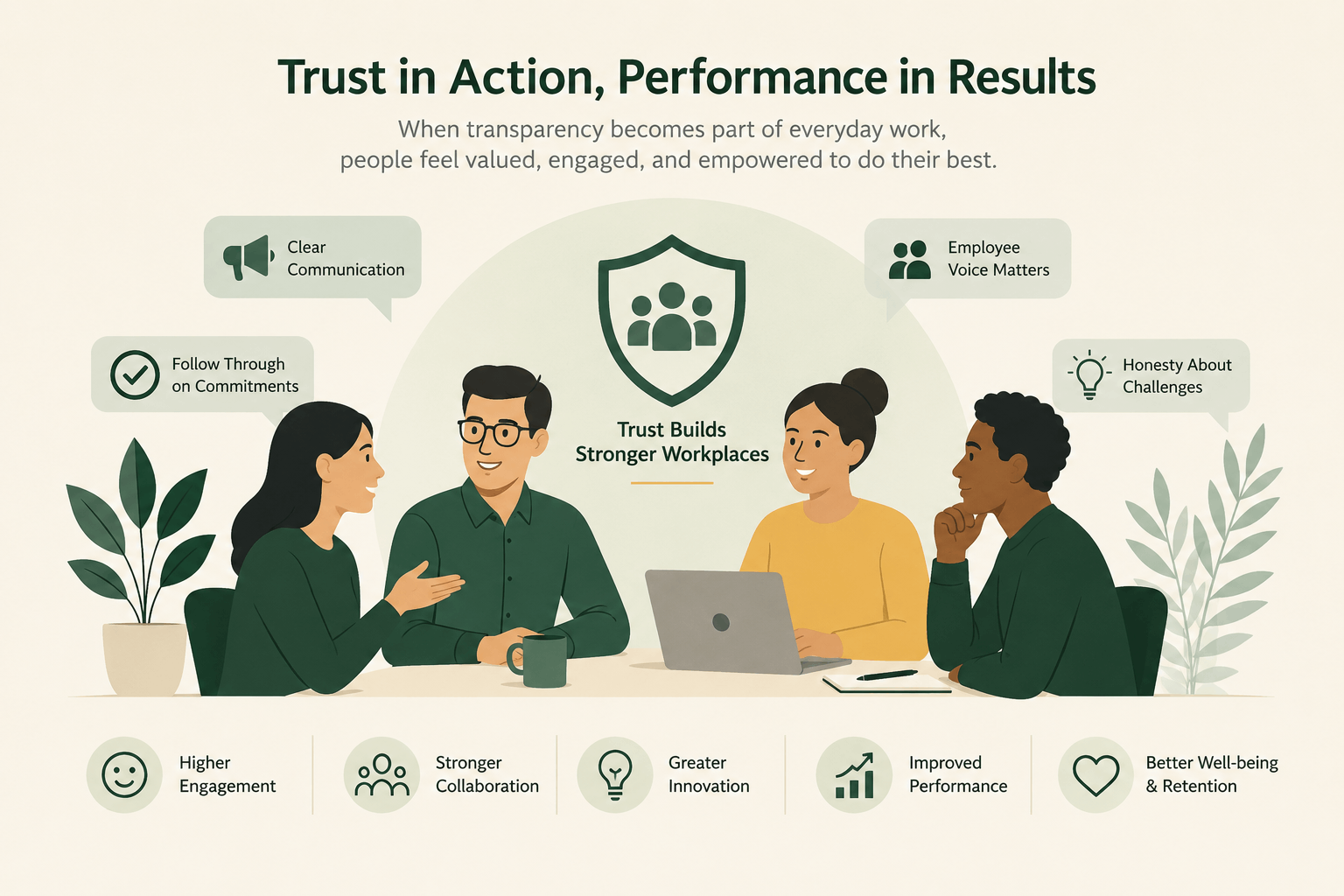
Building a More Transparent Workplace
Trust is built through consistent everyday actions.
Organizations can strengthen trust by:
- Communicating clearly and regularly.
- Explaining the reasoning behind decisions.
- Encouraging employee feedback.
- Being honest about challenges.
- Following through on commitments.
These small actions help create a culture where trust can grow over time.
The Bottom Line
Trust is a key driver of employee well-being, engagement, retention, and performance. By fostering transparency and open communication, organizations create workplaces where employees feel informed, valued, and psychologically safe. When trust becomes part of workplace culture, employees are more likely to stay, contribute, and perform at their best, benefiting both people and business outcomes.